A Silent Day will be an immersive visual & musical experience that revives the old tradition of silent film with live musical accompaniment. The screening of three avant-garde, and film history’s most influential silent movies, will be accompanied by experimental, innovative music, performed live by national and international composers/musicians Matti Bye (SE) / Lau Nau (FI), Nina de Heney/Henrik Olsson/Lisa Ullén (SE) and Edison Studio (Mauro Cardi, Luigi Ceccarelli, Alessandro Cipriani, Vincenzo Core, Andrea Veneri) (IT)
Three film genre will be addressed: historical, sci-fiction and horror. The idea of presenting silent movies accompanied by live music was successfully pilot tested within the HERE: 2021. Performing Arts Festival.
The event is supported by Kulturrådet and the Italian Institute of Culture.
21.03 - 22.03
21 March
17:00 Matti Bye (SE) / Lau Nau (FI) – The Passion of Joan of Arc by Carl Th. Dreyer (1928). 96 min. Restored.
18:40 Break. Dinner*
19:30 Nina de Heney, Henrik Olsson, Lisa Ullén (SE) – Nosferatu: A Symphony of Horror by F. W. Murnau (1922). 96 min. Restored.
22 March
17:00 Edison Studio (Mauro Cardi, Luigi Ceccarelli, Alessandro Cipriani, Vincenzo Core, Andrea Veneri) (IT) – Metropolis by F. Lang (1927). 144 min. Restored with surround sound.
Price:
150 SEK/day, 250 SEK for the whole weekend
- Dinner is not included in the ticket price but can be purchased on site or via Billetto. The food is prepared by an external catering company, vegetarian. Nuts free. Price: 130 SEK per meal.
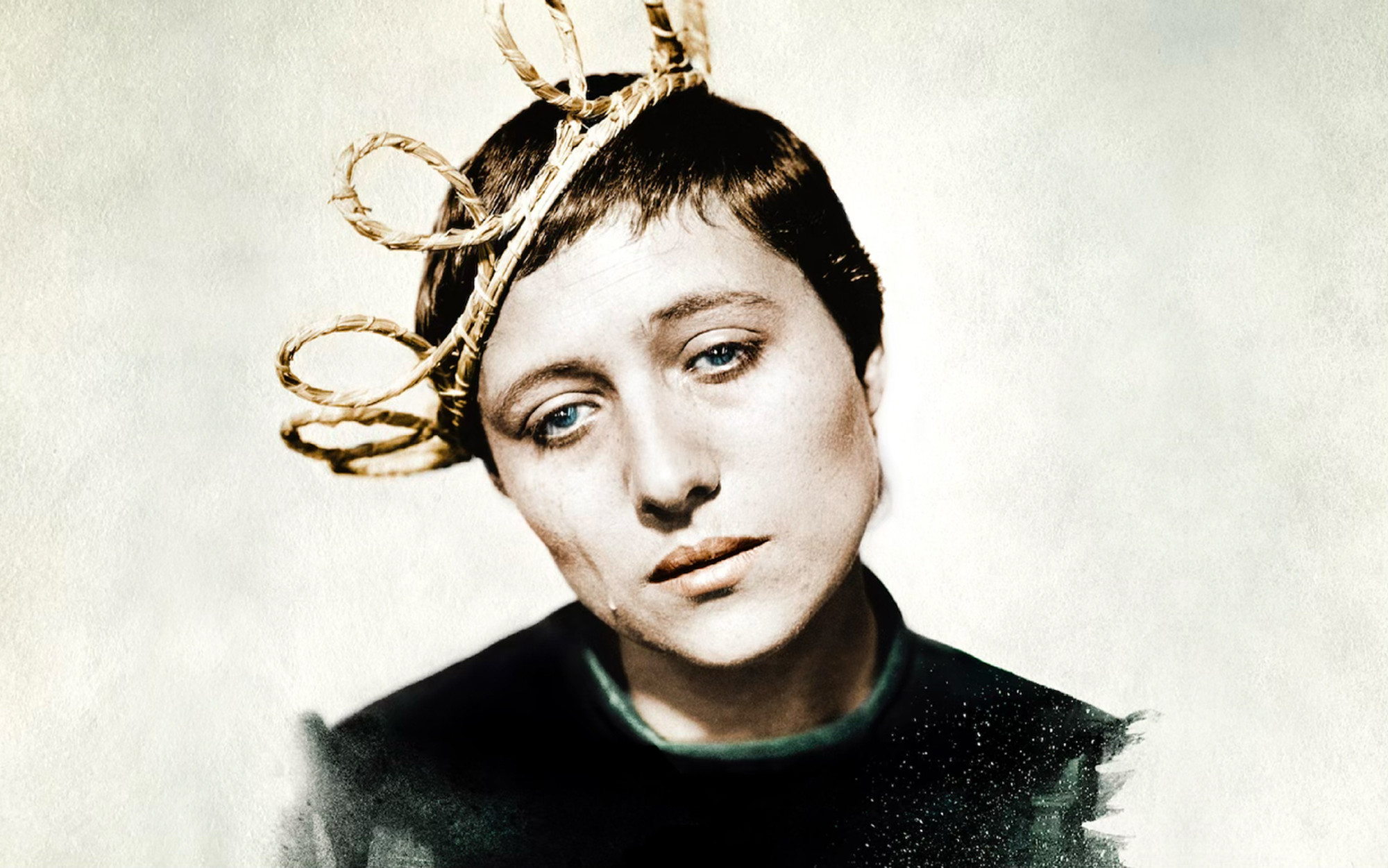
21 March. 17:00
Matti Bye (SE) / Lau Nau (FI)
The Passion of Joan of Arc
by Carl Th. Dreyer (1928). 96 min. Restored.
Cast: Maria Falconetti, Eugene Silvain, Antonin Artaud.
‘The Passion of Joan of Arc’ is celebrated for its innovative use of close-ups and pioneering experimental film techniques that increases the emotional engagement of the audience. Main character Renée Falconetti’s subtle and intense performance has been widely lauded for its expressiveness. The film delves into themes of faith, power, and human spirit, contrasting Joan’s purity with her accusers’ For its historical significance the film is widely considered as a landmark in cinematic achievement.
Bios
Matti Bye and Lau Nau bring new life to silent films and abstract non-sound visual works through a contemporary musical approach, creating a renewed and immersive experience for today’s audiences. Making improvised and composed music using acoustic prepared, processed and electronic sounds blended in a sensitive and powerful way for these beautiful images. The music becomes so close to the visual expression- a sensitive interaction only for this moment.
Matti Bye is widely considered as one of Sweden’s most important composers of film scores and an extraordinary performer with his own, incomparable style of improvisation on the piano. He is also widely recognized for having written a series of innovative scores for such early Swedish silent film classics as Phantom Carriage by Victor Sjöström, Häxan by Benjamin Christensen, and Gösta Berling Saga by Mauritz Stiller, now included on a 6 DVD box set released by Svensk Filmindustri, SF, as well as countless other silent films. Last year he wrote the score for Academy Award nominee Jan Troell’s latest feature Everlasting Moments and Stig Björkmans “Scenes from a playhouse” – a documentary about Ingmar Bergman. His foray into music started with the violin, the clarinet and the contrabass. However, none of these instruments matched his melancholic and romantic musical temperament. It wasn’t until he began to study the piano with an old Russian teacher that he found his true means of expression. Amazed by the sonic richness of the piano, it became his musical weapon of choice.
Matti Bye’s musical universe is a world of layered, imperceptibly shifting atmospheres. He employs instruments experimentally to create musical spaces for the listener to inhabit. To walk into this world is to discover sound within sounds, rooms within rooms. While his style of play is super-light and uninhibited, his live performances are always masterly paced, never straying from the higher purpose of the music. His musical output is approachable, sensual and melancholic, and captures perfectly the fragility of the Nordic light in his native country.
LAU NAU
Lau Nau, aka Laura Naukkarinen, is one of the more interesting names in the Finnish contemporary music scene. A composer, music producer and performer whose music is imbued with a cinematic breadth of vision and idiosyncratic, finely honed sound world. Lau Nau works using both acoustic and electronic instruments, from traditional instruments and singing voice to analogue synthesisers and field recordings. While her songs are luminous, melancholic pieces of experimental chamber folk music, her scores for films and sound installations are experimental studies of sound.
Lau Nau’s first solo albums were released in the US (Locust Music 2005 & 2008), winning acclaim from the likes of Pitchfork and The Wire. To date Lau Nau has released seven albums in Europe, USA and Japan, garnering prize nominations like Teosto-, Emma-, Jussi- and Femma prizes. Nowadays she is well known for her music to films, silent films, theatre, dance, multi channel sound installations and lectures about composing.
Besides of Lau Nau, Laura Naukkarinen plays also in an improvisational group Kiri Ra! and in duo with Matti Bye.
www.launau.com
At 18:40 Break/Dinner.**
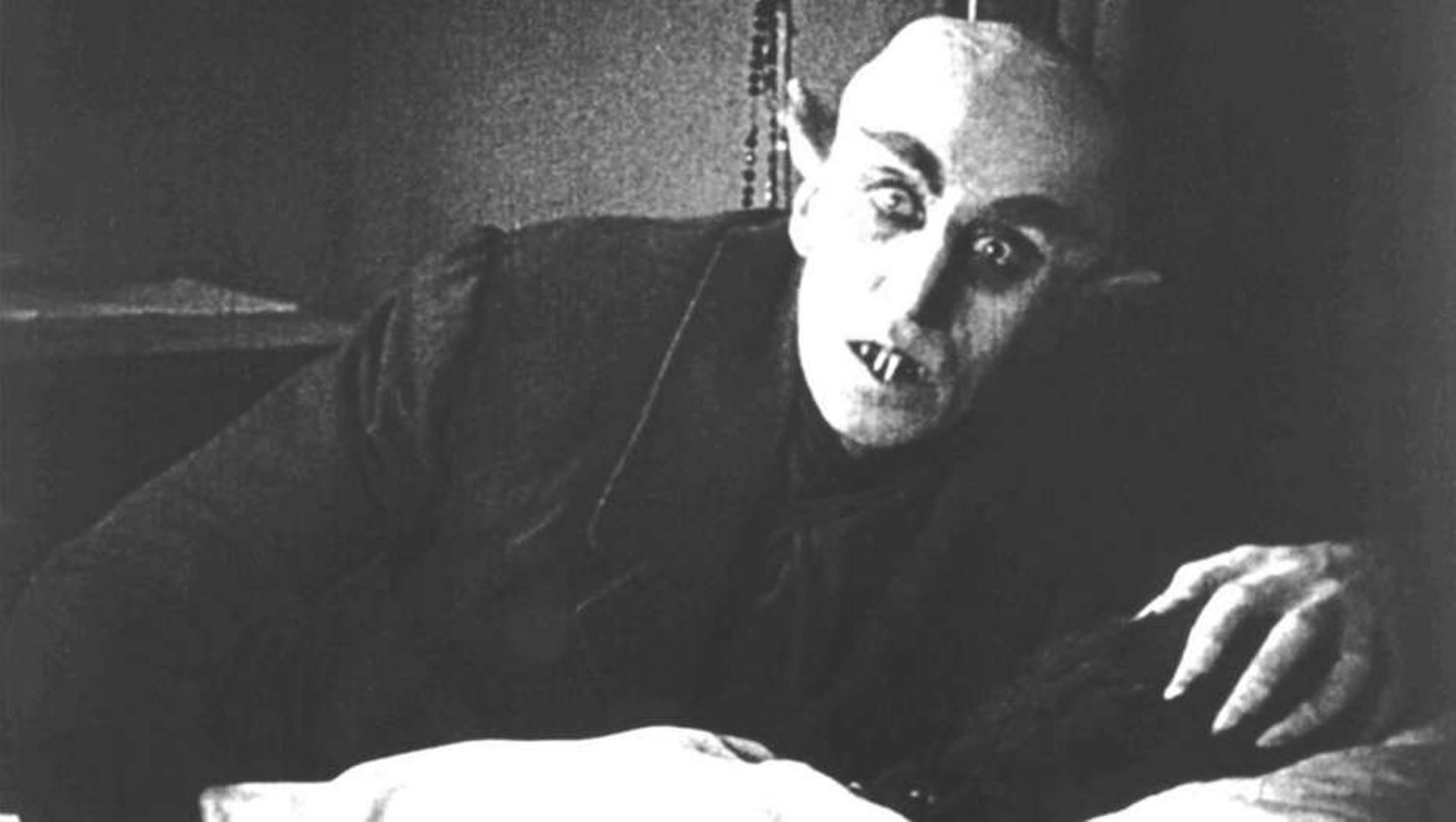
21 March. 19:30
Nina de Heney, Henrik Olsson, Lisa Ullén (SE)
Nosferatu: A Symphony of Horror
by F. W. Murnau (1922). 96 min. Restored
“Nosferatu – A Symphony of Horror,” directed by F. W. Murnau, is regarded as one of the most influential works of the silent era and of the horror genre. The film is distinguished by its expressionist visual language, evocative lighting, and innovative use of shadows, which create a pervasive atmosphere of unease and menace. It is the story of Dracula before the figure was buried beneath clichés, jokes, television skits, and cartoons, when the vampire still embodied existential dread and the unknown. Max Schreck’s iconic portrayal of Count Orlok is both restrained and profoundly unsettling, becoming one of cinema’s most enduring interpretations of the vampire figure.
Bios
Henrik Olsson (b. 1975 in the industrial town of Kyrkhult) moves freely between methods, concepts, notated music, and free improvisation, often blending acoustic sounds with amplified ones. With the help of contact microphones, even the smallest sounds are allowed to become powerful—an aesthetic approach that recurs throughout his artistic practice. As a member of the Matti Bye Ensemble, Henrik has performed live music for silent films at festivals including the San Francisco Silent Film Festival, the Cinemartic Film Festival in Svalbard, the Tromsø Silent Film Festival, and the Göteborg Film Festival.
Lisa Ullén, a native of Seoul, Korea, grew up in the northern part of Sweden, and is based in Stockholm. She is a graduate of the Royal Musical Academy in Stockholm, Sweden, where she studied classical piano in the late 1980s and early 1990s. Since the late 1990s, she has devoted herself entirely to improvised music, in the form of free jazz as well as avant garde and contemporary classical and experimental music. A versatile player with a singular musical vision, Ullén has repeatedly proven her ability to imprint her absolute sense for tonal texture on whatever musical context she appears in.
Nina de Heney, born in 1962, grew up in Switzerland. She studied with Miroslav Vitous at the New England Conservatory of Music in Boston from 1981 to 1983. Nina moved to Sweden in 1983, where she again studied from 1988 to 1993 at the Göteborg Conservatory of Music, where she also achieved a Soloist Diploma 2004 to 2006. She started doing solo performances in 1992, often working with dancers and in 2008 she founded the festival Dance ‘n’ Bass alongside dancer and choreographer Anna Westberg. Her three solo albums Archipelago, 2 and Three have all been met with critical acclaim and she has, on several occasions, been nominated for the Swedish Jazz Celebration and received the 2012 Jazz Musician of the Year Award. In addition to this she has been awarded funds from the Swedish Arts Grant on several occasions. Nina has been working in the jazz and improvisation scene in Sweden for many years with a number of groups and is currently working in duo with pianist Lisa Ullén and in trio with Karin Johansson, piano, and Henrik Wartel, drums.
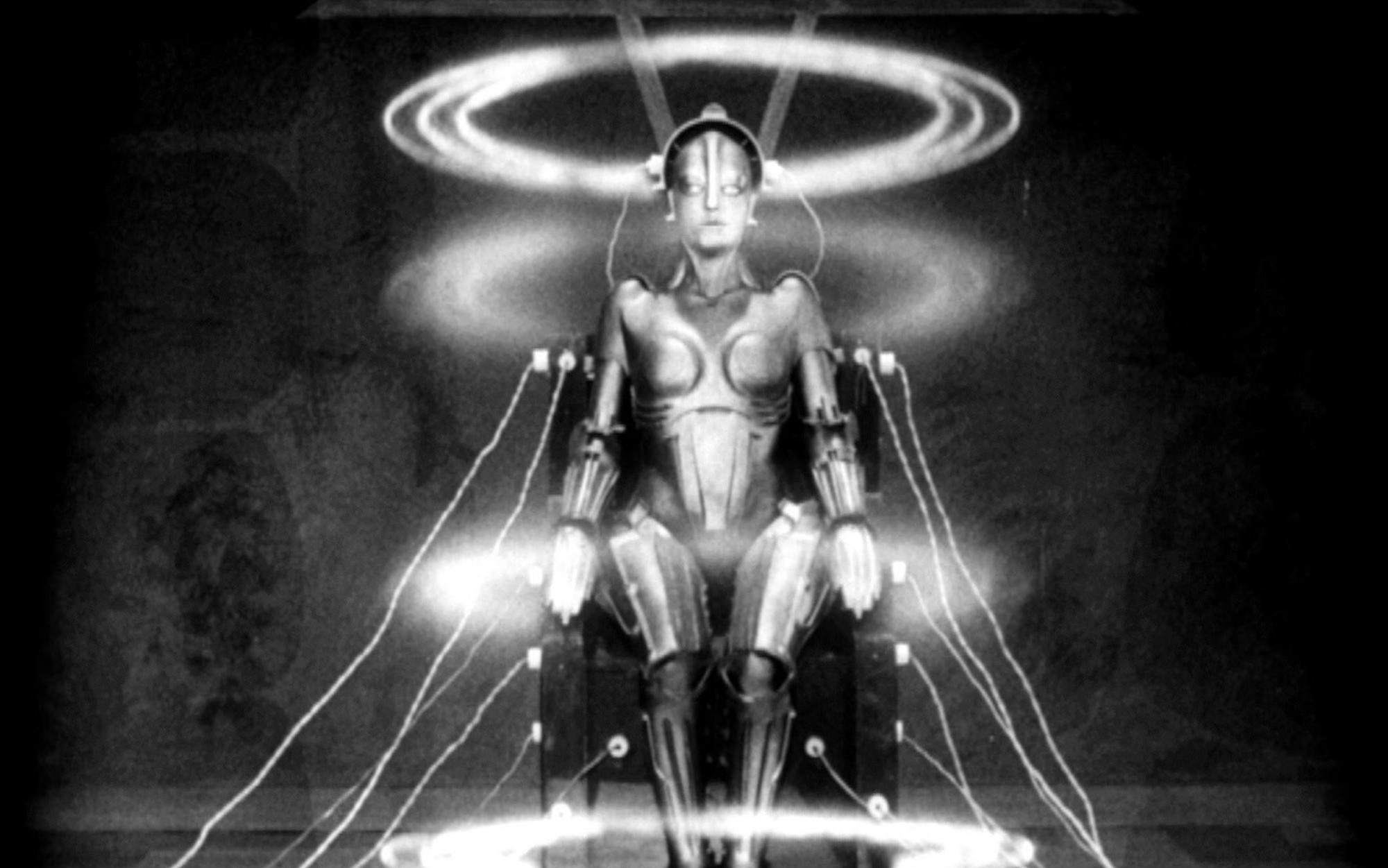
22 March. 17:00
Edison Studio (Mauro Cardi, Luigi Ceccarelli, Alessandro Cipriani, Vincenzo Core, Andrea Veneri) (IT)
Metropolis
by F. Lang (1927). 144 min. Restored with surround sound
‘Metropolis’ is an expressionist science-fiction silent film widely regarded as one of the greatest and most influential films ever made. It’s a film that hailed in a new era of making films with its futuristic settings and hallucinatory scenes. A groundbreaking science fiction film that delves into class struggle, technological dangers, and social harmony. Its innovative visual style, special effects, and set design have inspired films like ‘Blade Runner’ and ‘Star Wars’. The dystopian city depiction and commentary on labor and consumerism remain both impactful.
Bios
Edison Studio is a collective of composers founded in 1993 by Mauro Cardi, Luigi Ceccarelli, Fabio Cifariello Ciardi and Alessandro Cipriani with the aim of combining personal creative and productive skills for the creation of musical works in relation to the visual arts and through live performance.
Since 1993, Edison Studio’s productions have been commissioned by numerous international festivals (ICMC Singapore, Ravenna Festival, Redcat Los Angeles, Union of Russian Composers) and performed live by the authors themselves using the most innovative electroacoustic techniques both in musical creation and production concerts.
One of the most significant activities of Edison Studio is the creation and live performance of original soundtracks for great masterpieces of silent cinema: “Das Cabinet des Dr. Caligari” (R. Wiene, 1919), “Inferno” (F. Bertolini and A. Padovan, 1911), “Battleship Potemkin” (S. Ėjzenštejn, 1925), all published on DVD by the Cineteca di Bologna in the Cinema Ritrovato series, and also “The Last Days of Pompeii” (E. Rodolfi, 1913), “Blackmail” (A. Hitchcock, 1929) and "En Dirigeable sur les Champs de Bataille” (anonymous, 1918).
https://www.edisonstudio.it/en/
Dinner is not included in the ticket price but can be purchased on site. The food is prepared by an external catering company, and both meat and vegetarian options are offered. Price: approximately 130–150 SEK per meal. To guarantee a meal, please pre-book via Billetto.